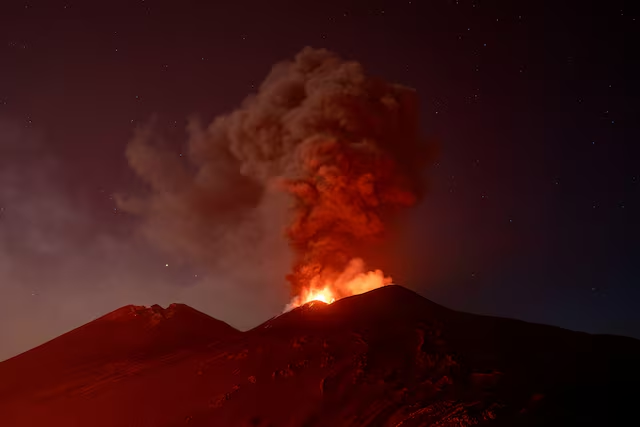
VALLETTA, Malta — An ash cloud from Italy’s Mount Etna has drifted across Malta, disrupting air travel to the Mediterranean island at the peak of the summer tourism season.
Malta International Airport said on Tuesday that volcanic ash in the airspace over the Maltese Islands had forced airlines to cancel flights and caused significant delays for passengers.
By Tuesday afternoon, 19 flights had been cancelled, while several other services were delayed for extended periods, according to an airport spokesperson.
The disruption followed renewed volcanic activity at Mount Etna, one of Europe’s most active volcanoes, which has been erupting since last week.
Ash cloud reaches Malta
Mount Etna is located in eastern Sicily, about 220 kilometres (140 miles) north of Malta. Although the volcano is outside Malta, winds carried the resulting ash cloud towards the island, creating conditions that posed difficulties for aircraft operations.
Malta International Airport said the disruption was directly linked to volcanic ash over the island.
“We’re currently experiencing flight disruptions due to volcanic ash clouds over the Maltese Islands following recent activity at Mount Etna,” the airport said in a statement posted on social media.
Volcanic ash is a major aviation hazard because fine particles can enter aircraft engines, potentially affecting their operation and visibility. Airlines and aviation authorities therefore closely monitor ash concentrations before allowing flights to operate through affected areas.
The disruption comes at a particularly busy period for Malta, which attracts large numbers of international tourists during the summer.
Catania airport also affected
The eruption has also disrupted operations at Catania Airport in Sicily, one of Italy’s busiest airports.
The airport, which handles millions of passengers each year, announced on Tuesday that restrictions on flights would continue, with arrivals and departures suspended until 11:00 a.m. local time on Wednesday.
The airport has experienced repeated disruption because of Etna’s activity, with volcanic ash affecting the surrounding airspace and forcing authorities to impose temporary restrictions.
The latest interruption follows several days of disruption after the volcano became active again last week.
Catania is an important transport gateway for eastern Sicily, serving both local residents and tourists travelling to destinations across the region. Prolonged flight restrictions can therefore have a significant impact during the summer travel period.
Airlines warn passengers to check flights
Passengers travelling through either Malta International Airport or Catania Airport have been advised to confirm their flight status before leaving for the airport.
The authorities warned that schedules could change depending on volcanic activity and the movement of the ash cloud.
Travellers affected by cancellations or delays are expected to contact their airlines for information about alternative arrangements.
The situation demonstrates how volcanic activity can disrupt aviation far beyond the immediate area surrounding an eruption.
Although Malta is more than 200 kilometres from Mount Etna, the movement of volcanic ash across the Mediterranean has been enough to affect flight operations on the island.
Etna remains closely monitored
Mount Etna is Europe’s most active volcano and regularly experiences periods of increased activity.
Its eruptions can produce lava flows, ash and volcanic gases, with the impact varying depending on the strength of the eruption and prevailing winds.
For aviation authorities, the direction and concentration of volcanic ash are particularly important because even relatively distant ash clouds can force aircraft to avoid affected airspace.
As the latest eruption continues, aviation authorities in Italy and Malta are monitoring conditions closely.
For travellers, the immediate priority is to check updated flight information before heading to either airport as further changes remain possible.
The latest disruption highlights the wider effects of Mount Etna’s activity, with an eruption in Sicily once again affecting transport and tourism across the central Mediterranean.